BV7 House Rehabilitation | Calheta
Client: Private
Area: 44m2
Team: to be defined
Construction: to be defined
Contractualization: 2024
[On license]
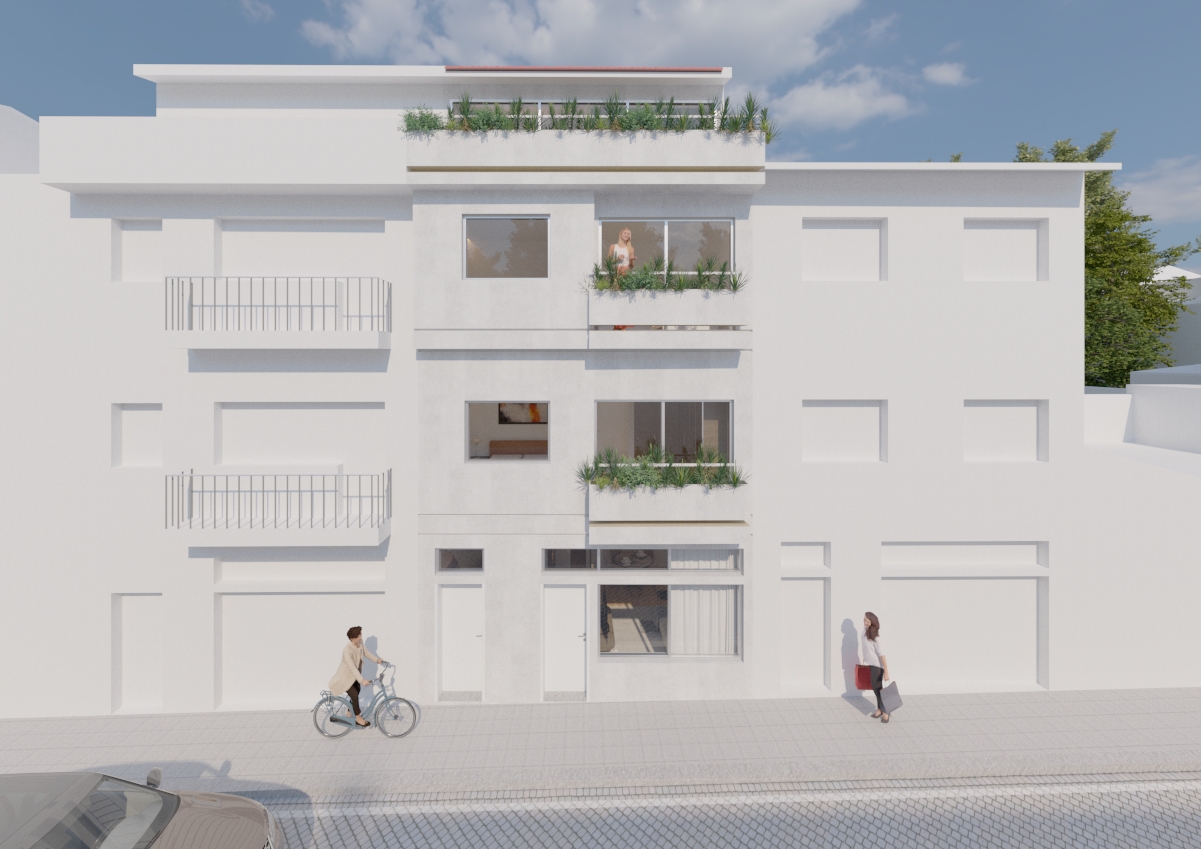
The Calheta house was born from listening to the place. A fragment of construction lying dormant between the sea and the street, with just 40m².
A restrained gesture, which aims to do nothing more than respectfully inhabit the clearing that time has left behind. The ocean is there – absolute, continuous. Architecture just needs to open its eyes.
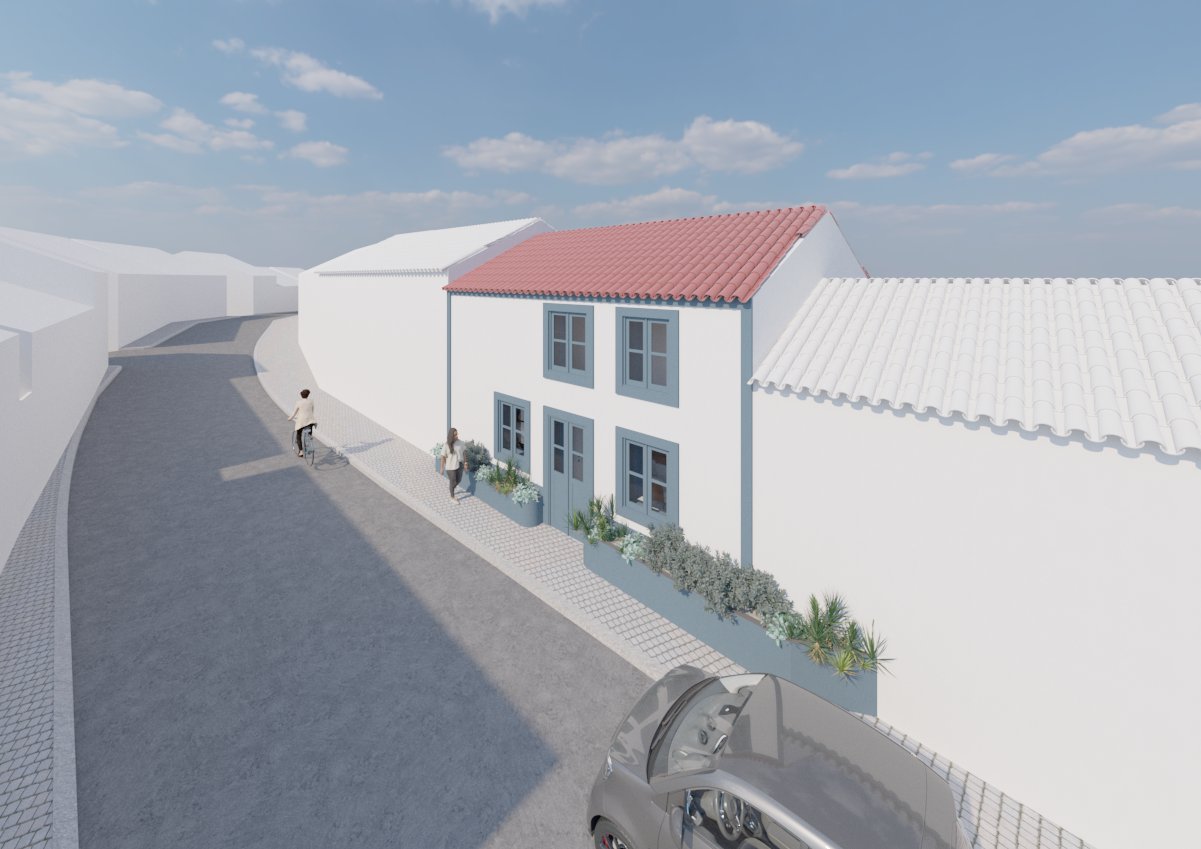
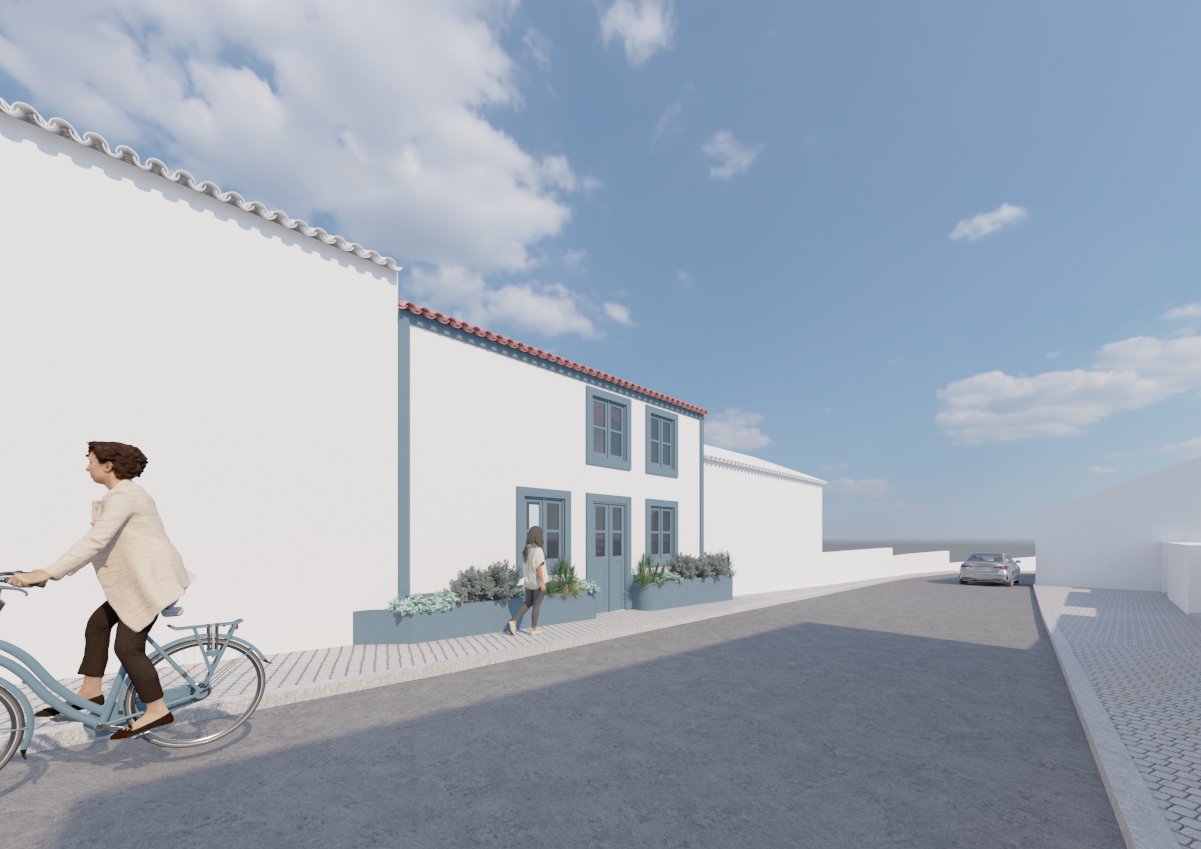
Intervene without disturbing
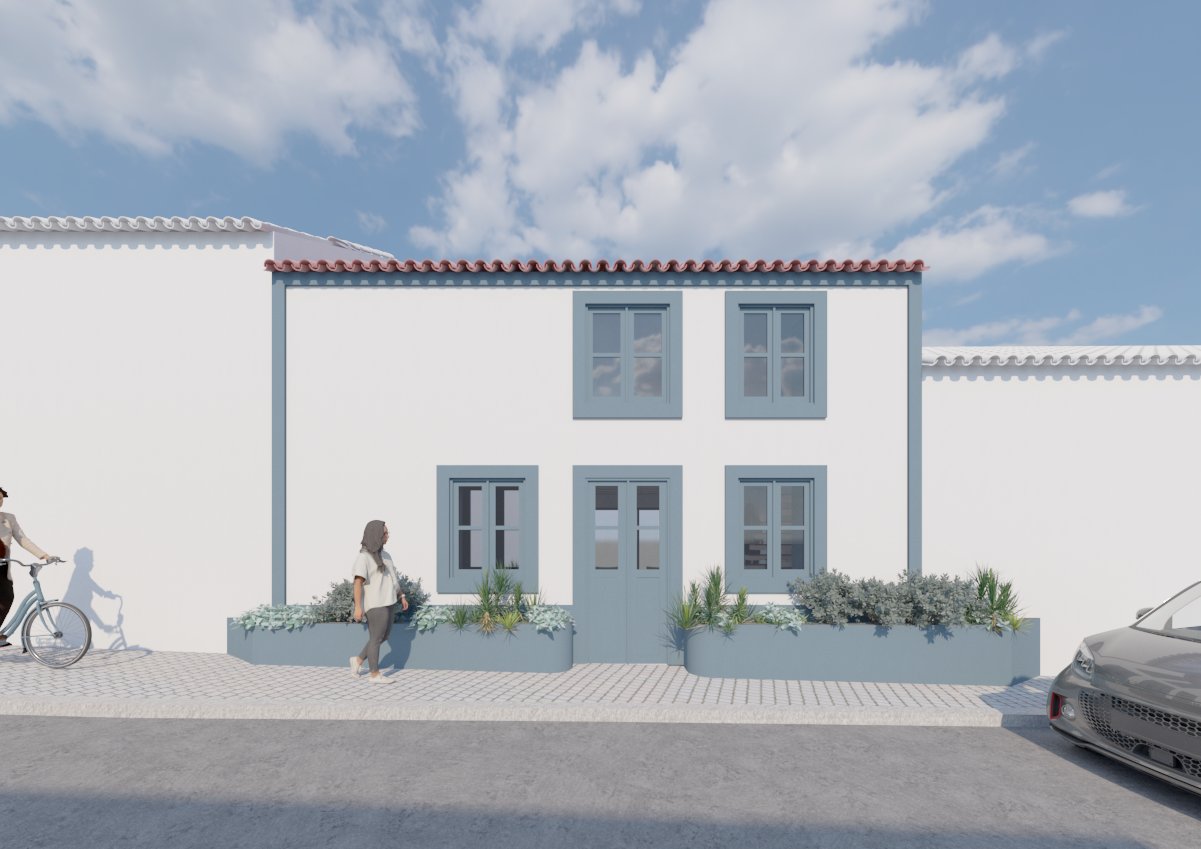
The silence of the façade
From the street, the house is almost indistinguishable. It retains the thickness of time, the design of the windows, the proportion of the door. We intervened inside, leaving the street intact.
Because architecture is also about being silent and recognizing that sometimes everything is already designed and integrated into the whole.
Where light draws time
Search for the importance of light
We took advantage of the old attic, not as a gesture of expansion, but as an understanding of what was already there, latent. It was a volume hidden under the roof, just waiting to be inhabited by light.
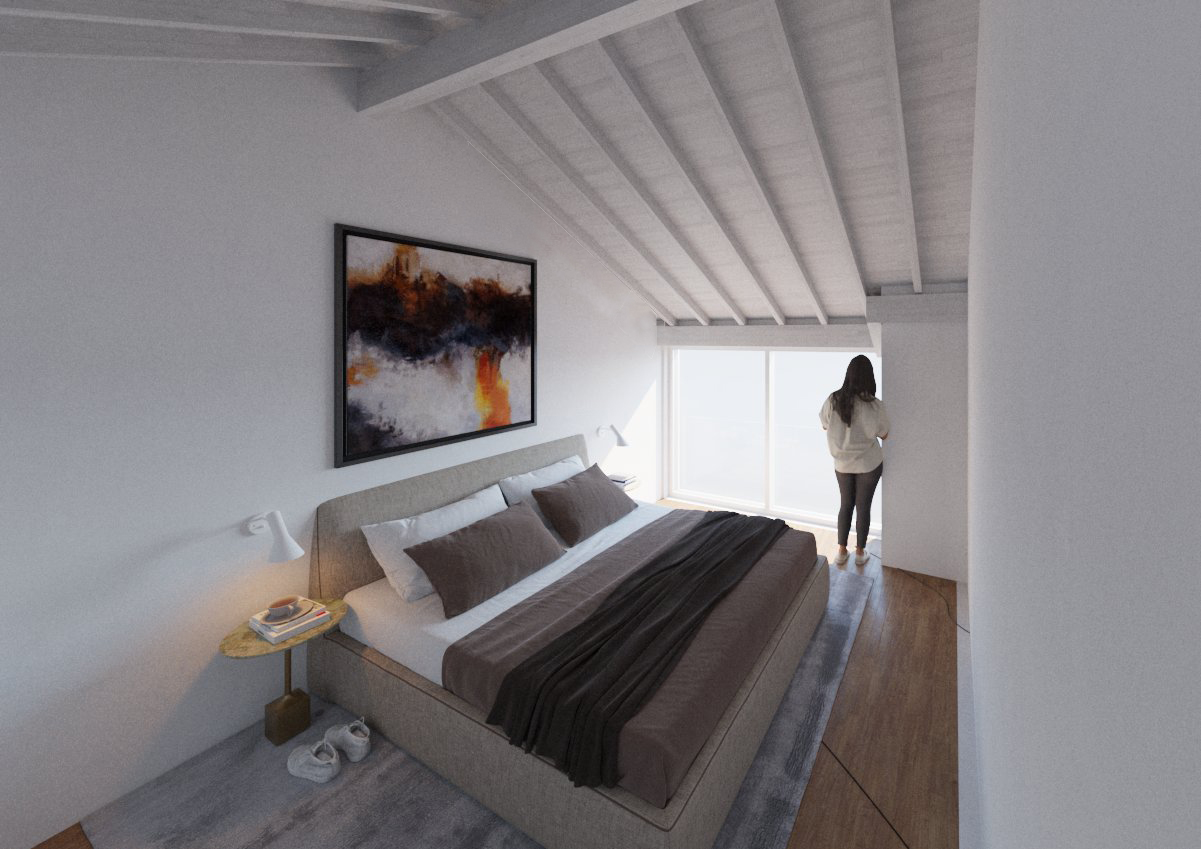
This upper, discreet space now welcomes rest. It’s not a floor. It’s an interval. A contained place, where the sloping ceiling draws time. The slope creates corners of shade and areas of closeness to the sky. There is a window, precisely placed, which offers the lying body the line of the sea. A minimal gesture that transforms the entire space.
Light, coming from above and from the front, doesn’t enter as an effect. It enters as matter. It reveals the textures, marks the rhythm of the day and carries with it the silence of the ocean. The architecture simply excavates – not with demolition, but with care. It removes, empties, shores up. So that what is essential can happen: the presence of the sea, the shelter of the roof, the breath of light.
It is in this balance between what is open and what is protected that the house finds its place. An architecture that doesn’t invent, but listens. That doesn’t add, but reveals.
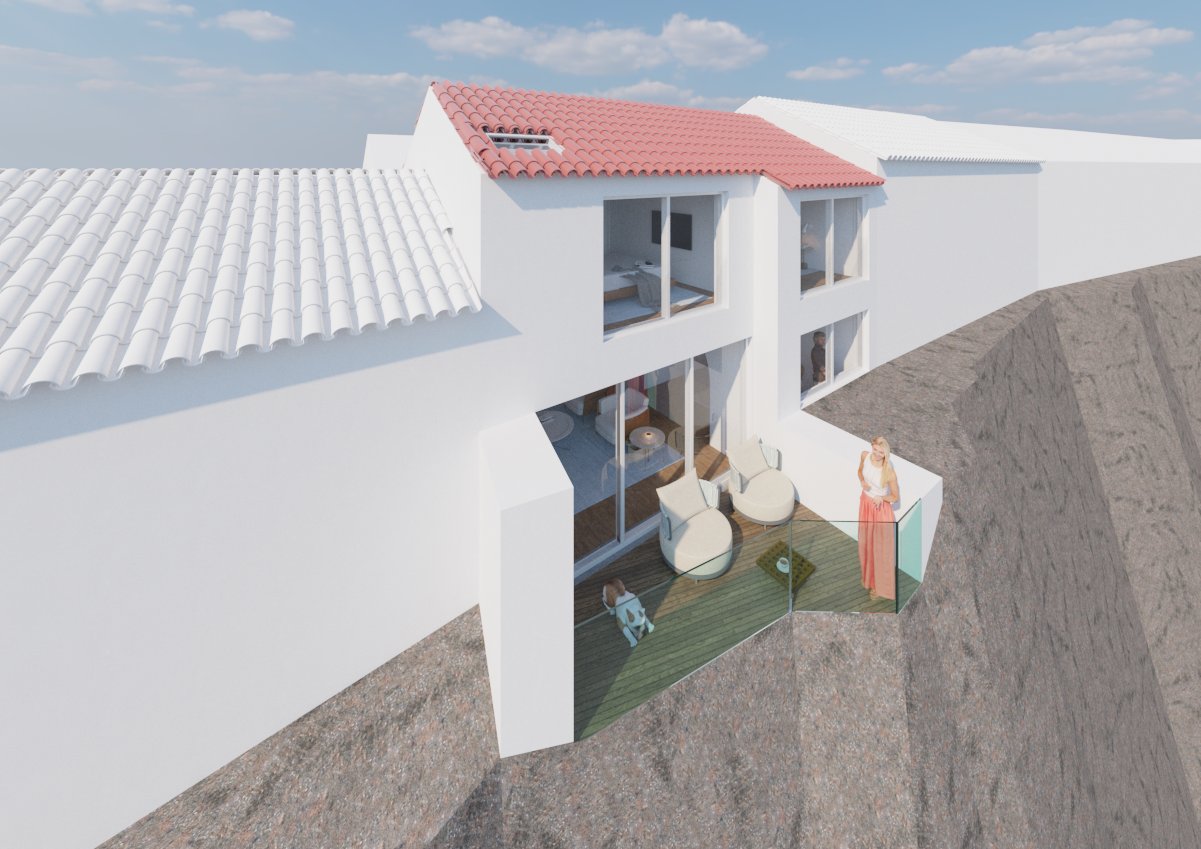
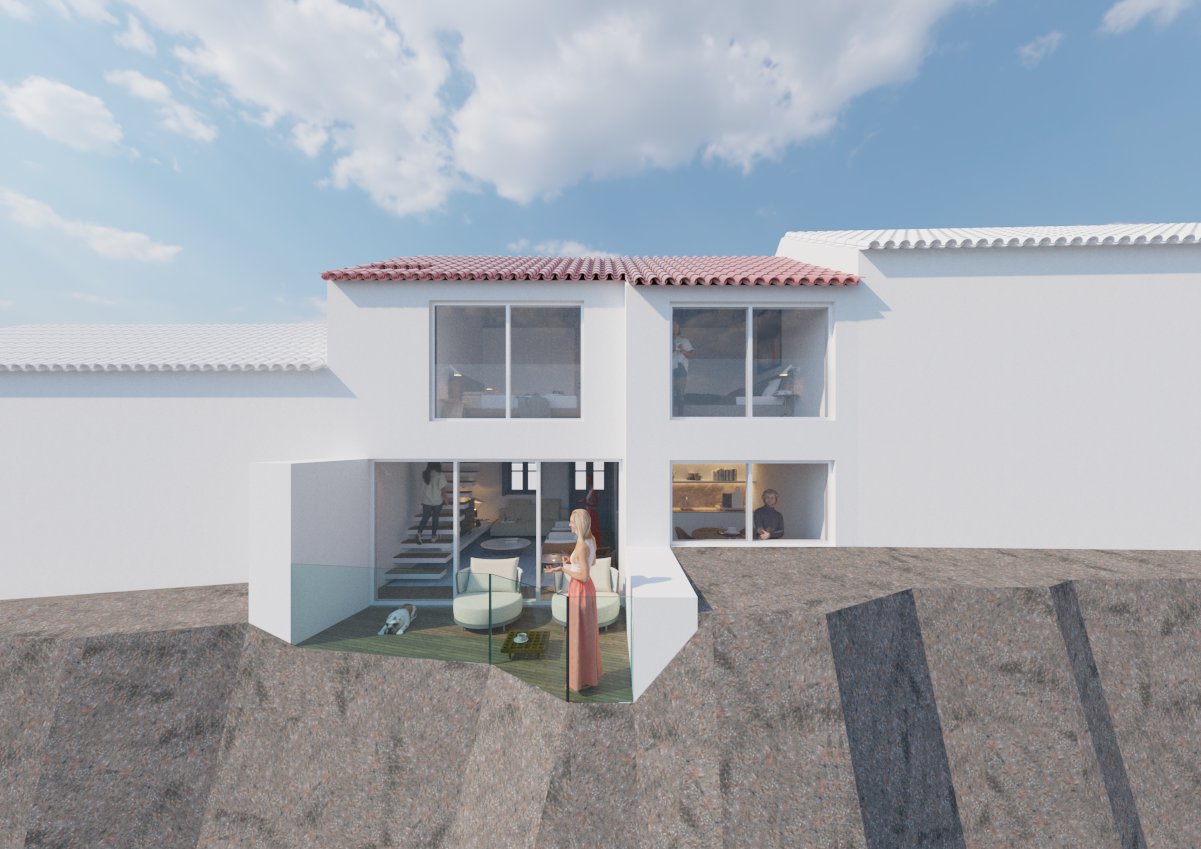
Where light draws time
Search for the importance of light
We took advantage of the old attic, not as a gesture of expansion, but as an understanding of what was already there, latent. It was a volume hidden under the roof, just waiting to be inhabited by light.
This upper, discreet space now welcomes rest. It’s not a floor. It’s an interval. A contained place, where the sloping ceiling draws time. The slope creates corners of shade and areas of closeness to the sky. There is a window, precisely placed, which offers the lying body the line of the sea. A minimal gesture that transforms the entire space.
Light, coming from above and from the front, doesn’t enter as an effect. It enters as matter. It reveals the textures, marks the rhythm of the day and carries with it the silence of the ocean. The architecture simply excavates – not with demolition, but with care. It removes, empties, shores up. So that what is essential can happen: the presence of the sea, the shelter of the roof, the breath of light.
It is in this balance between what is open and what is protected that the house finds its place. An architecture that doesn’t invent, but listens. That doesn’t add, but reveals.
Precision, use and permanence
Time draws matter
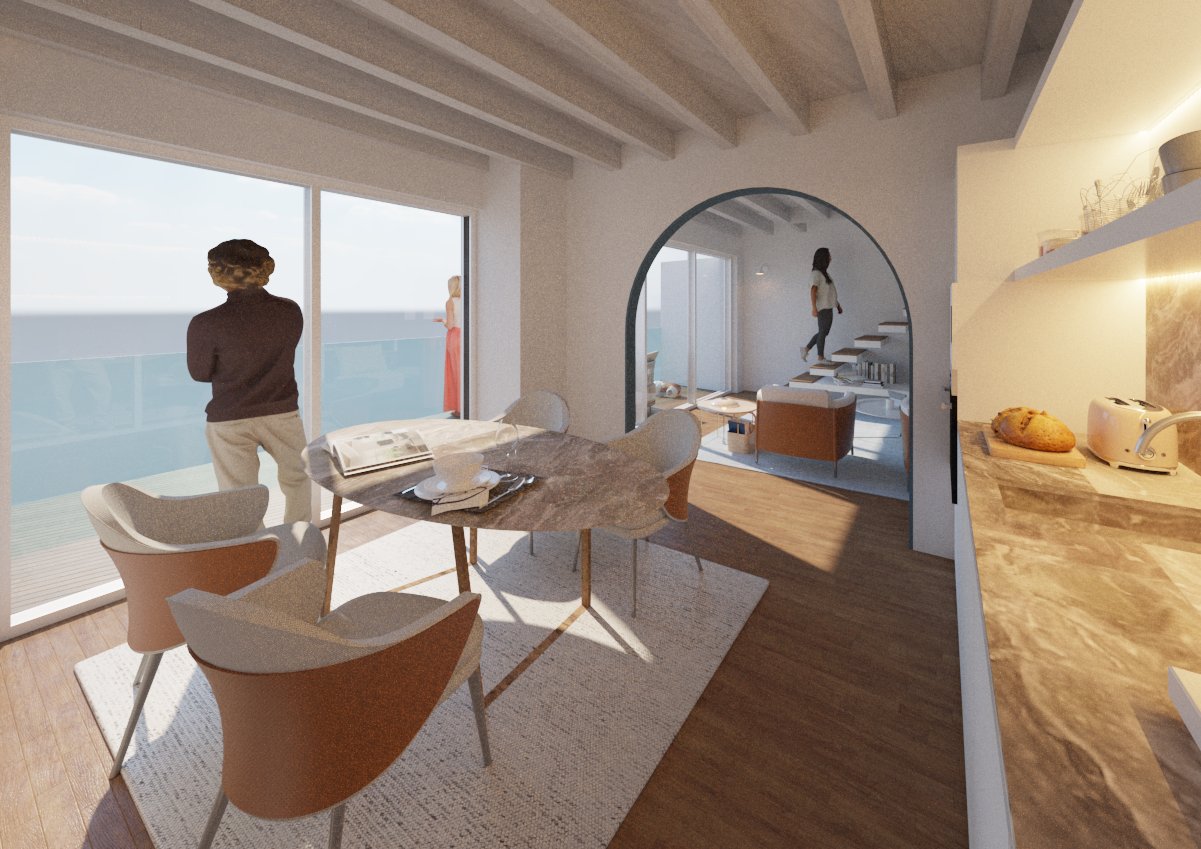
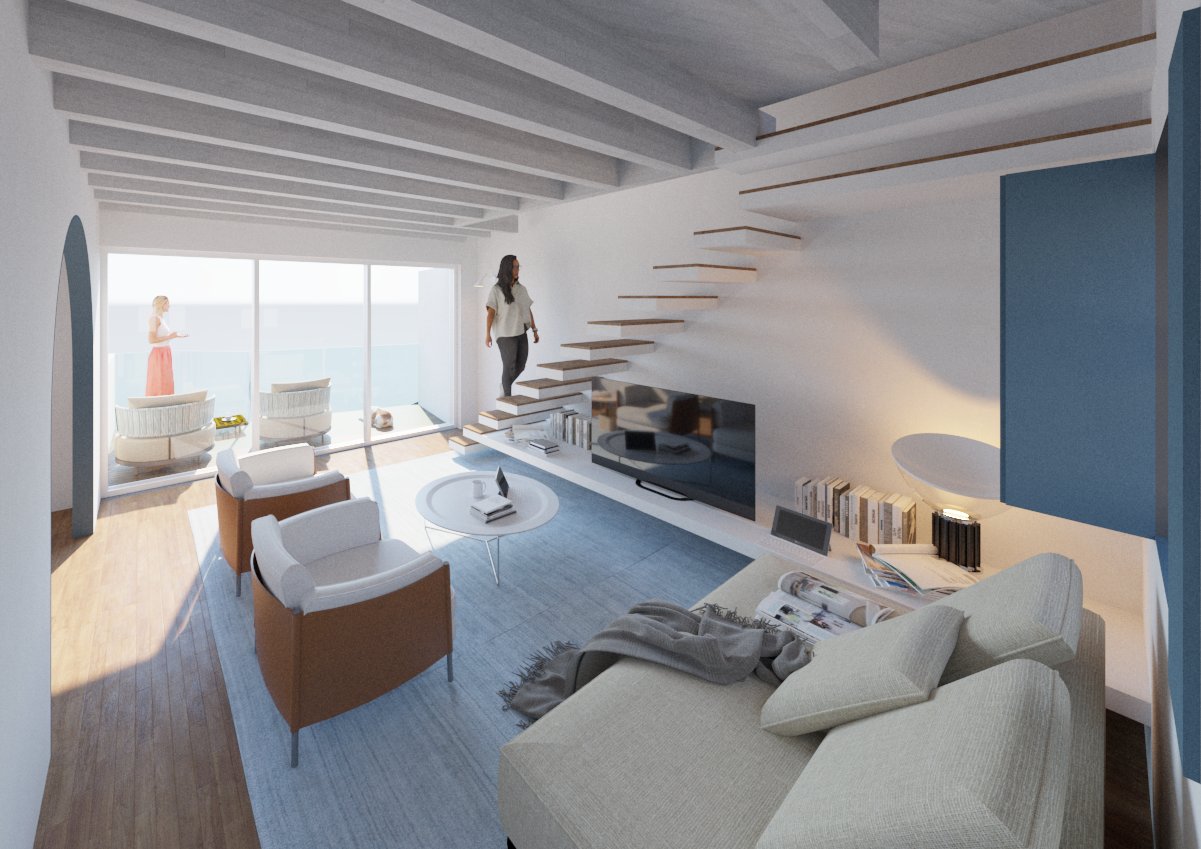
The materials chosen respond directly to the place: lime on the walls, wood on the structural and contact elements, local stone on the foundation and in the most worn areas. We didn’t try to reproduce a past or evoke a traditional image – from the outset, it was a question of continuing a language that time had already written.
The interior was entirely designed by our team. Each plane, each joint, each thickness is the result of careful construction of proportion and use. We opted for a rigorous and functional design, where materiality was evident but never decorative. The wooden surfaces have been treated to withstand intense use and proximity to the sea, but retain the natural reading of grain and imperfection.
The lime walls interact with the humidity in the air and help regulate the interior environment. The light that enters through the front openings travels through these materials and reinforces their presence – more by absorption than by reflection. The stone on the ground floor serves as a thermal and physical base, welcoming footsteps, sand from the beach and everyday gestures.
We worked with materials that not only belong to the place – but that accept ageing as part of their identity. The house was not designed to maintain an unchanging state, but to mature with time, use and climate.
It is in the precision of detail and the continuity of materials that architecture asserts itself. Discreet, but built to the end.
Project Gallery
Unique characteristics that set it apart
Casa Atlântica in Ribeira Grande
Set on a narrow plot, next to the rocky front facing the Atlantic, the house establishes an absolute relationship with the sea: a continuous, unobstructed view.
The traditional façade has been rigorously preserved – lime, wood and original proportions – while maintaining the dialog with the historic center. At the rear, large, discreet openings blur the boundaries between the interior and the ocean.
The former attic was transformed into a habitable refuge, with strategic openings that frame the horizon and ensure cross-ventilation.
The materiality – lime, wood and stone – translates into durability against the sea and coherence with the context.
At just 40 m², the project proves that a small scale doesn’t limit ambition: every detail has been designed to optimize light, circulation and comfort, rooting the architecture in place quietly and precisely.